






U²C Phase II Skyway Rehabilitation and Downtown Expansion Project Development and Environment Study Public Meetings

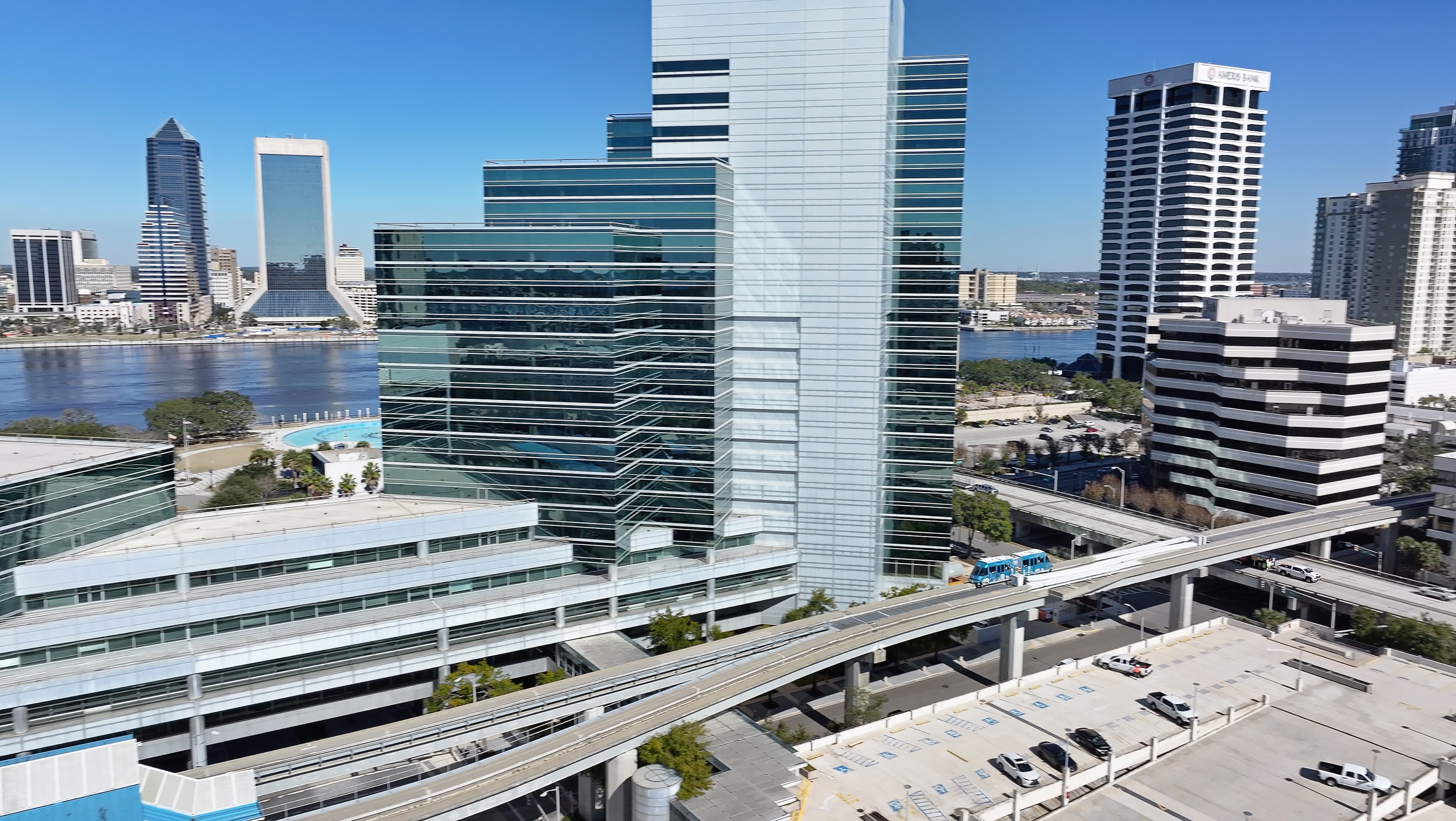
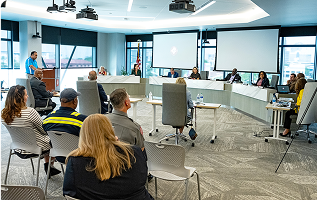
Community Meetings
February 25
11 AM–1 PM
Jacksonville Transportation Authority Board Room
100 LaVilla Center Drive
5-7 PM
Jacksonville Marriott Downtown Duval Ballroom
245 Water Street
March 5
11 AM–1 PM and 5–7 PM
Conference Center at the Main Library
303 N. Laura St. (enter on Main St.)
March 24
11 AM–1 PM and 5–7 PM
FSCJ Advanced Technology Center – Room T140
401 West State Street
March 26
11 AM–1 PM and 5–7 PM
Doubletree Jacksonville Riverfront
1201 Riverplace Boulevard
Frequently Asked Questions
What is a PD&E Study?
A Project Development and Environment (PD&E) Study is an environmental and engineering process that was developed by the Florida Department of Transportation (FDOT), in response to the National Environmental Policy Act (NEPA) of 1969. The PD&E study process ensures that transportation projects are developed with consideration of current engineering standards, project costs, and minimization of social and environmental impacts, while involving the public throughout the entire study process.
Impacts considered include:
Land use
Protected species and habitat
Wetlands and floodplains
Water quality, stormwater management and permitting
Air quality and noise
Archeological and historic resources
Cultural and natural resources
Physical and sociocultural effects
Right-of-way requirements and relocations
Contamination and construction effects
All these factors may not be relevant to each area studied. This study will not address expansion into adjacent neighborhoods as that is being addressed under a separate study.
How is this different from previous studies?
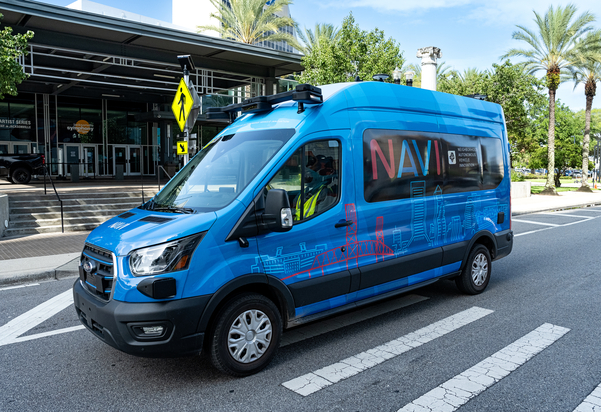
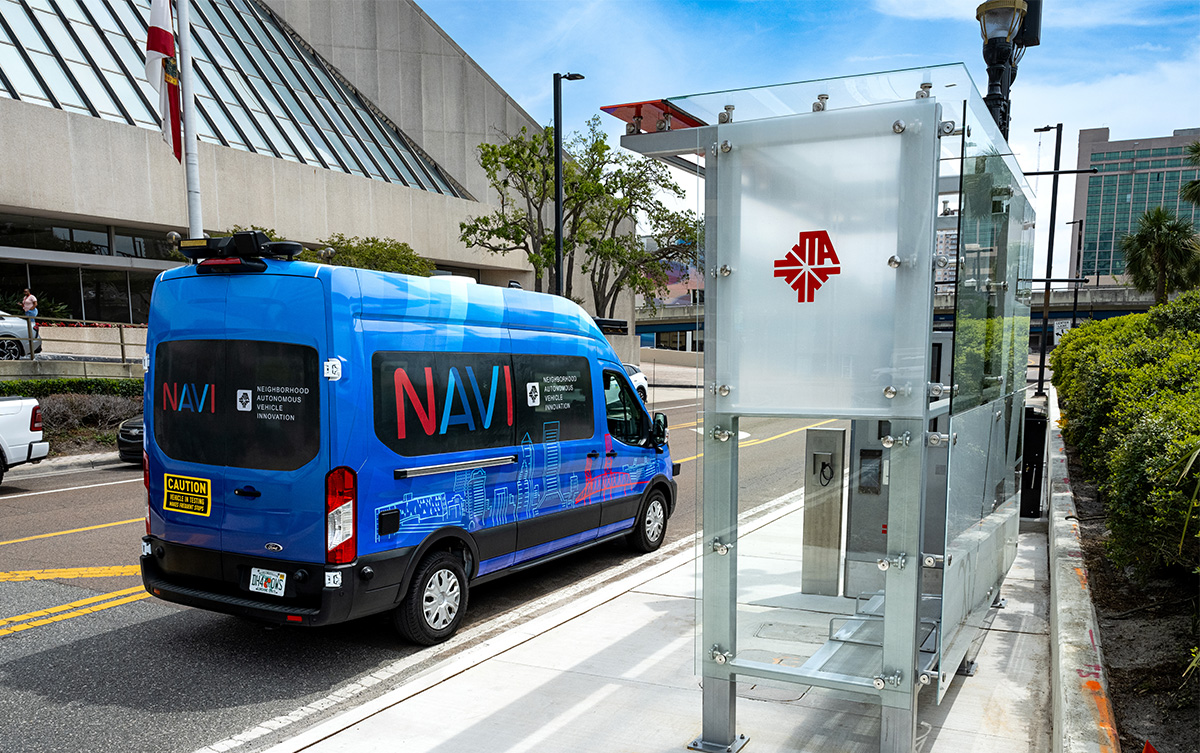
A study was conducted in 2015 to evaluate the Skyway’s technology and condition at that time. Subsequent studies looked at existing and future conditions along the Skyway, potential future corridors for expansion including the Brooklyn station, transit-oriented development potential, and options for autonomous vehicles (AV). The Bay Street Innovation Corridor (BSIC) was developed as the testbed for the NAVI AV service to use in other corridors.
This PD&E study focuses on what to do as the current Skyway vehicles reach the end of useful life and will look at options for:
Addressing system deficiencies
Improving system operations
Exploring new vehicle options
Improving system modal connections
Responding to transportation and economic development demand
This study will also include the development of 30% plans for the preferred alternative. The plans will be a set of preliminary design documents and drawings that represent approximately 30% completion of a project, establishing major design decisions like alignment, general access changes, and typical cross-sections to define the project scope and refine the budget and schedule. This allows for stakeholder input and a preliminary review of the project’s key features before moving into more detailed design phases.
What is the study process and timeframe?
The study process kicks off with identifying viable alternatives. Through public input and initial analysis, those options will narrow down to a group for a more detailed environmental analysis. A preferred alternative will then be recommended to the JTA Board of Directors based on the detailed analysis results and public feedback.
The first round of public meetings are as follows:
February 25, 11 AM–1 PM at Jacksonville Transportation Authority Board Room 100 LaVilla Center Drive
February 25, 5-7 PM at Jacksonville Marriott Downtown Duval Ballroom
245 Water StreetMarch 5, 11 AM–1 PM and 5–7 PM at Conference Center at the Main Library
303 N. Laura St. (enter on Main St.)March 24, 11 AM–1 PM and 5–7 PM at FSCJ Advanced Technology Center – Room T140
401 West State StreetMarch 26, 11 AM–1 PM and 5–7 PM at Doubletree Jacksonville Riverfront
1201 Riverplace Boulevard
JTA will hold additional meetings in late spring to reflect feedback received and further analysis narrowing alternatives to a preferred alternative recommendation.
How will I be able to provide input?
The public will have opportunities to provide input throughout the study in surveys and at public meetings.
Alternatives
During this initial phase of the study, we are looking at potential alternatives for analysis and have preliminary information on benefits, impacts, and costs. During the next phase we will have more detailed information on the most viable alternatives.
General Questions
What is the current Skyway ridership?
The average non-linked passenger trips on the Skyway for the five-year period of 2020-2024 was 314,278.
How will the service improve with these alternatives?
Service improvements will be evaluated for each alternative as part of the study. However, with the No Build option, the system would operate the same as it does today with minor repairs that are needed to maintain it. In the near future, the current service will cease operating based on the difficulty of maintaining parts and servicing the vehicles and tracks.
What about the any Federal payback?
Skyway service must continue for the full-service life to avoid potential repayment to the Federal Transit Administration (FTA), which could also affect future funding opportunities.
Will the stations be upgraded?
Potential upgrades to improve stations will be evaluated as part of the study process based on the alternative. For example, the No Build option would not include station upgrades.
No Build
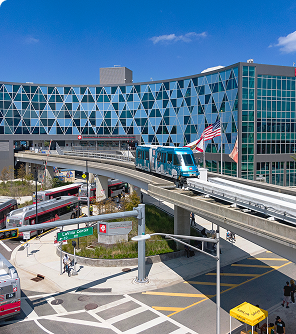
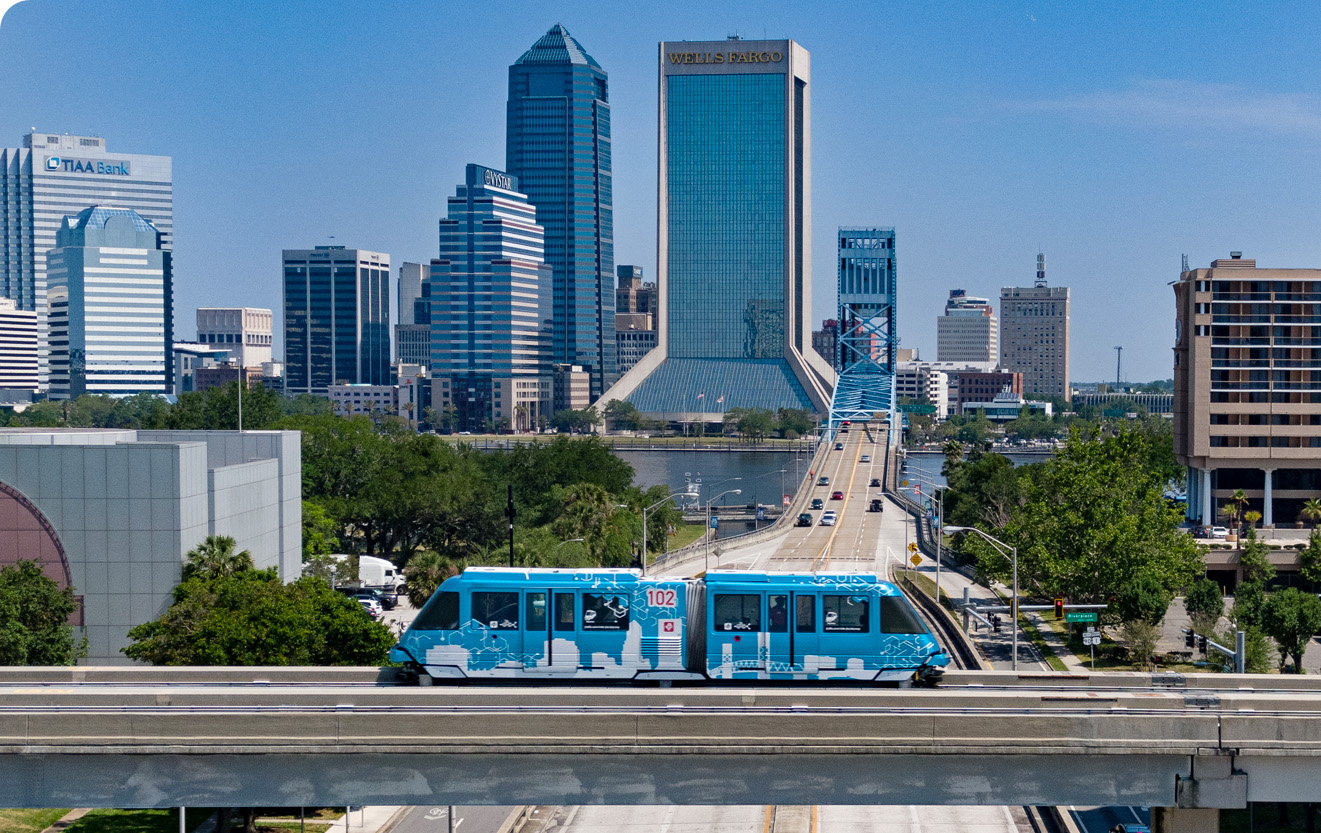
The No Build keeps the Skyway system operating as it does today with the last two remaining vehicles. The existing track, vehicles, and automated train control system would remain in use as long as feasible. Required track repairs would be made to maintain basic service for as long as possible.
What are the challenges with maintaining the Skyway as it currently exists?
The Skyway vehicles were originally built as prototypes and are now more than 35 years old. Replacement parts for both mechanical and electrical systems are increasingly difficult to source, and the system software is significantly outdated. Only two vehicles remain operational. In addition, several deferred maintenance needs on the elevated guideway and supporting infrastructure must be addressed.
Alternative 1: Retrofit the Existing Vehicles
Alternative 1 keeps the Skyway system operating as it does today and finds a manufacturer to repair, retrofit, and rebuild the vehicle fleet back to the original service level. The existing track would remain in use with retrofitted vehicles and a new automated train control system. Repairs would be made to the existing track to maintain the existing service.
Are similar or updated vehicles that fit the current guide beam available?
The Skyway is currently operating with 35-year-old prototype vehicles that are no longer in production. Of the original fleet of ten trains, only two remain in working condition. Identifying a manufacturer willing to retrofit or modernize the existing vehicles may prove challenging, particularly given their age, unique specifications, and limited production history. In addition, the structural integrity of the mothballed vehicles has not been fully assessed, raising further uncertainty about their viability for refurbishment or return to service.
Alternative 2: New Automated People Mover (APM) Trains
Alternative 2 would replace the current Skyway system with a new fleet of modern APM trains. This upgrade would require removing the center guide beams, retrofitting the elevated structure, and completing any additional structural updates needed to support new trains. The automated train control system would also be replaced or updated to ensure compatibility with the newer technology.
What is ridership capacity for new Skyway vehicles?
The original system was designed to support 5,000 passengers per day. Upgrading the system to modern vehicles and operating system would be expected to exceed that original design.
With technology evolving so quickly, will these vehicles be worth the investment?
Because this alternative relies on modern technology, it would provide approximately 25 additional years of service life. However, it would also require extensive reconstruction of the existing guideway to accommodate the newer APM vehicles, which are larger, heavier, and impose greater structural demands than the current fleet.
Will this alternative improve service delays?
With a larger fleet and higher-capacity vehicles, this alternative would reduce the time between arrivals and minimize delays experienced under the current service.
Will this alternative increase the flexibility of the system?
This alternative would continue to operate solely between fixed stations. Riders would still be required to transfer to autonomous vehicles (AVs) or other modes to reach destinations within downtown and nearby neighborhoods.
Alternative 3: Convert Track and System to Autonomous Vehicles (AV) on a New Track
Alternative 3 upgrades the Skyway to support both current and future autonomous vehicles (AVs). Under this option, the elevated guideway would be resurfaced and modified to function as a dedicated AV roadway, and the existing train control system would be replaced with technology embedded within the vehicles themselves. This approach shifts system intelligence from the guideway to the vehicles, improving operational flexibility and reducing the risk of future obsolescence.
Are there any technological concerns?
By locating the core technology within the AVs rather than the guideway infrastructure, the system becomes less susceptible to outdated track-based technology or long-term functional obsolescence.
Are there other advantages of autonomous vehicles (AVs)?
AVs can travel beyond Skyway stations connecting neighborhoods and downtown destinations without requiring riders to switch travel modes.
How would the vehicles travel to ground at these locations and What properties would be impacted?
New ramp connections could be constructed at Rosa Parks, Leila Street, and Kings Avenue to allow AVs to enter and exit the elevated guideway and access the local street network. These connections would increase route flexibility and improve service coverage to surrounding neighborhoods. Property impacts associated with these improvements are currently being evaluated, and we will engage potentially affected property owners for input before any decisions are made.
What changes would be required to the structure?
Substantial modifications to the elevated guideway would be required, including improvements to the riding surface and raising platform areas at stations to align with AV boarding heights. Constructing new access ramps may also require additional right-of-way and increase overall construction costs. These upgrades could result in extended construction durations.
Alternative 4: Remove Skyway Structure and Operate Autonomous Vehicles on Existing Streets
Alternative 4 removes the existing elevated Skyway and station platforms entirely. New street-level stations would be constructed, and autonomous vehicles (AVs) would operate within a dedicated lane where feasible on existing downtown streets. This option eliminates the elevated Skyway and fully transitions service to the roadway network.
What are the ramifications of tearing down the existing Skyway?
Eliminating the elevated system would trigger repayment obligations to the Federal Transit Administration (FTA) and could jeopardize eligibility for future federal funding. Demolishing the Skyway would require substantial capital investment without providing any operational or mobility benefits.
How would the AVs be implemented?
Removing an elevated mobility option for public transit would require AV operation in mixed traffic exclusively, reducing the frequency of service. Riders would lose the ability to bypass street congestion, signals, and intersections, reducing travel reliability compared to an elevated guideway.
Does operating AVs at grade provide additional flexibility?
Operating on existing roadways allows AV routes to adjust as downtown develops, offering future adaptability. The system is not on a predetermined guideway.
Alternative 5: Repurpose Skyway as a Multiuse Trail and Operate Autonomous Vehicles on Existing Streets
Alternative 5 repurposes the existing elevated Skyway into a multiuse trail that connects directly with the Emerald Trail network. New street‑level stations would be constructed, and autonomous vehicles (AVs) would operate within dedicated lanes where feasible on existing downtown streets. This option repurposes the Skyway while maintaining it as an active transportation facility.
What is the benefit of an elevated multiuse trail?
Transforming the elevated Skyway into a multiuse trail offers a unique mobility experience that enhances recreation, connectivity, and placemaking.
How would the Skyway be modified?
Converting the guideway into a safe, accessible multiuse trail requires significant modifications to the elevated structure and stations to accommodate the multiuse trail. Hardscape and landscaping would be added to create a unique Jacksonville experience.
How is the alternative different from alternative 4?
The implementation of AV service under this alternative is identical to Alternative 4. However, because the Skyway structure would remain in use as a repurposed transportation facility, the project may not trigger repayment obligations to the Federal Transit Administration (FTA).