U²C Phase I
Bay Street Innovation Corridor
Status: Completed
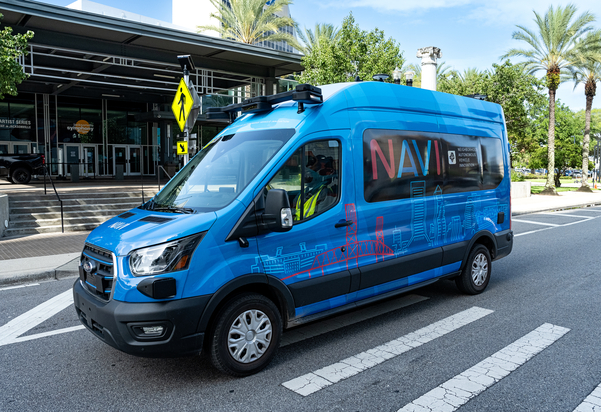
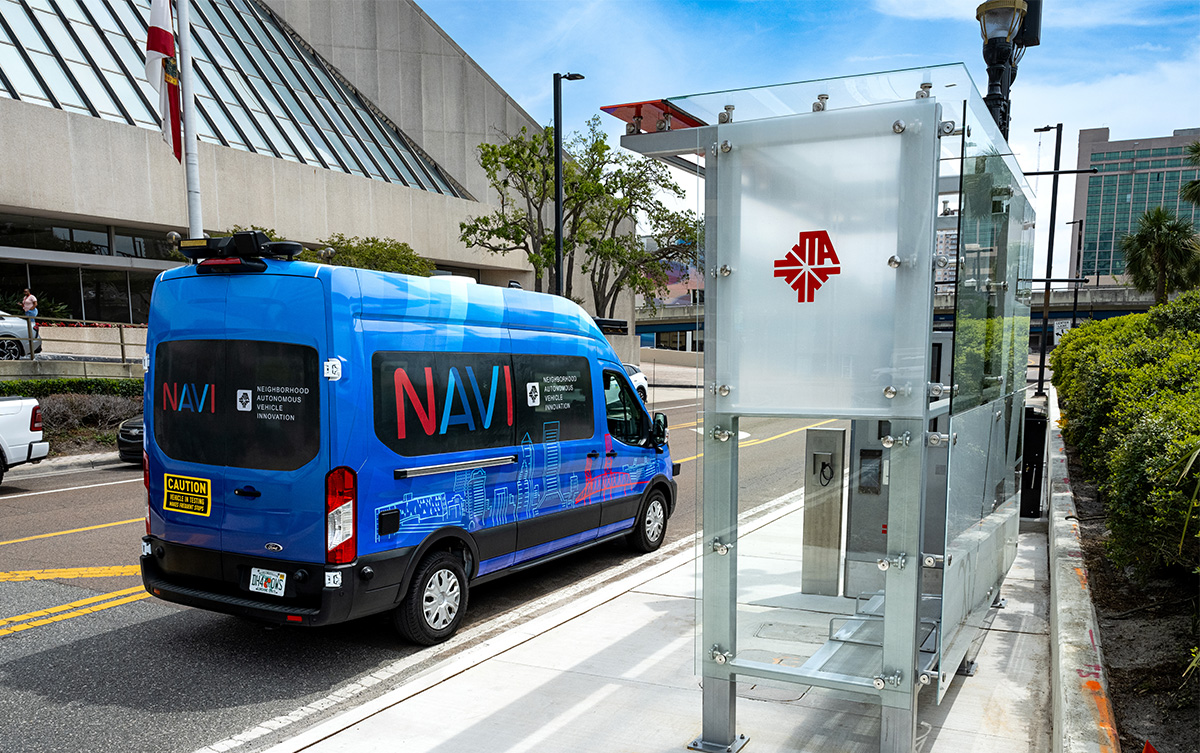
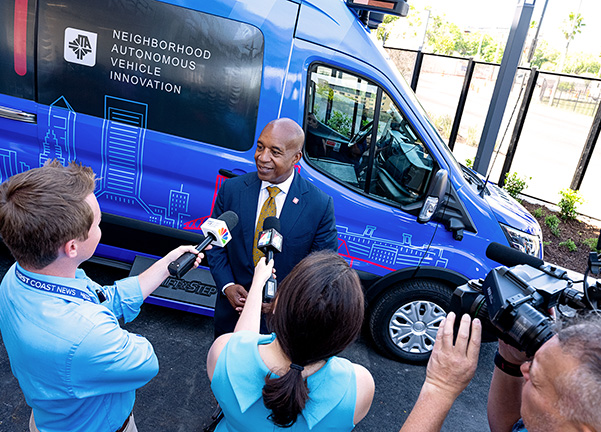
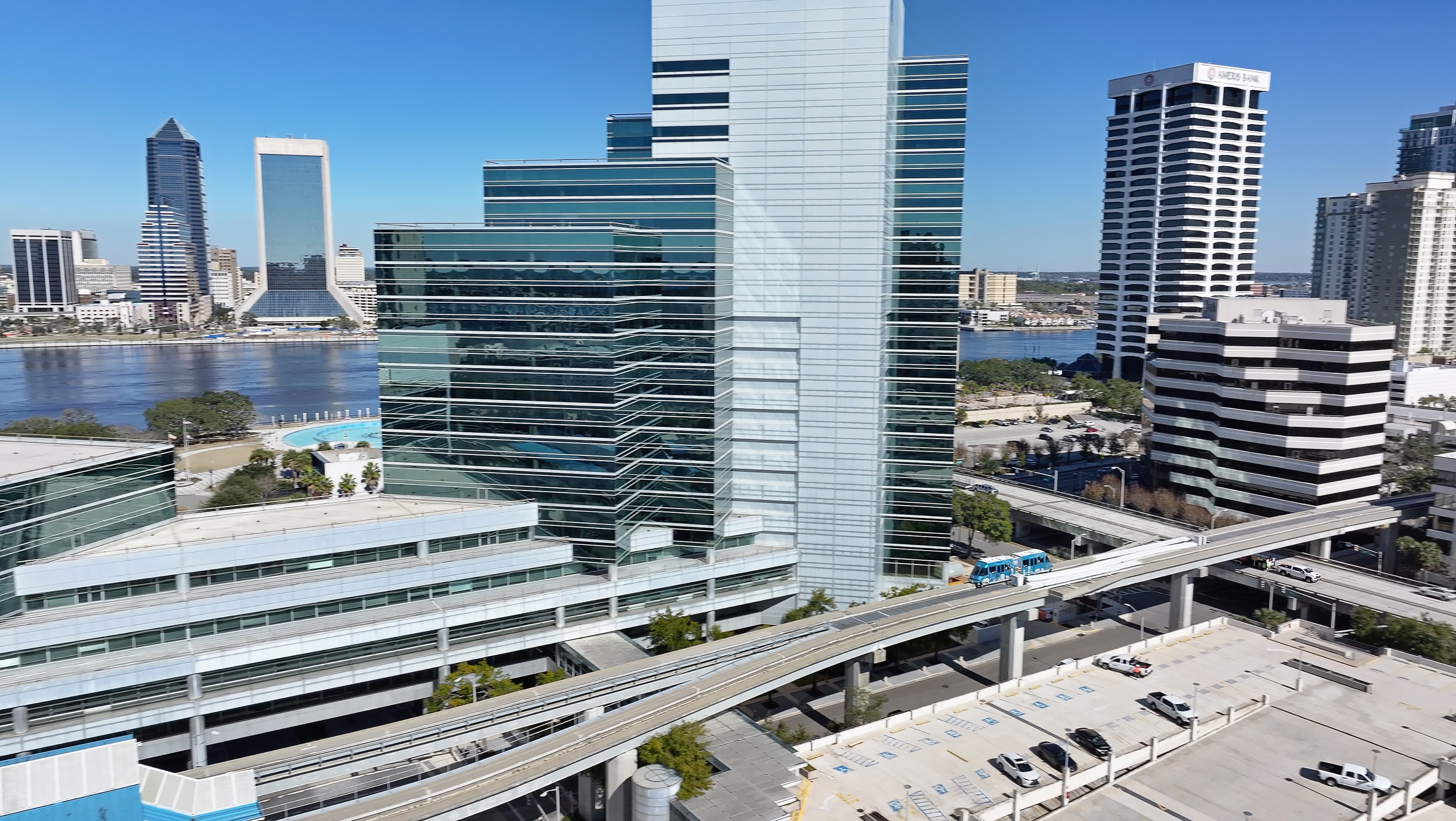
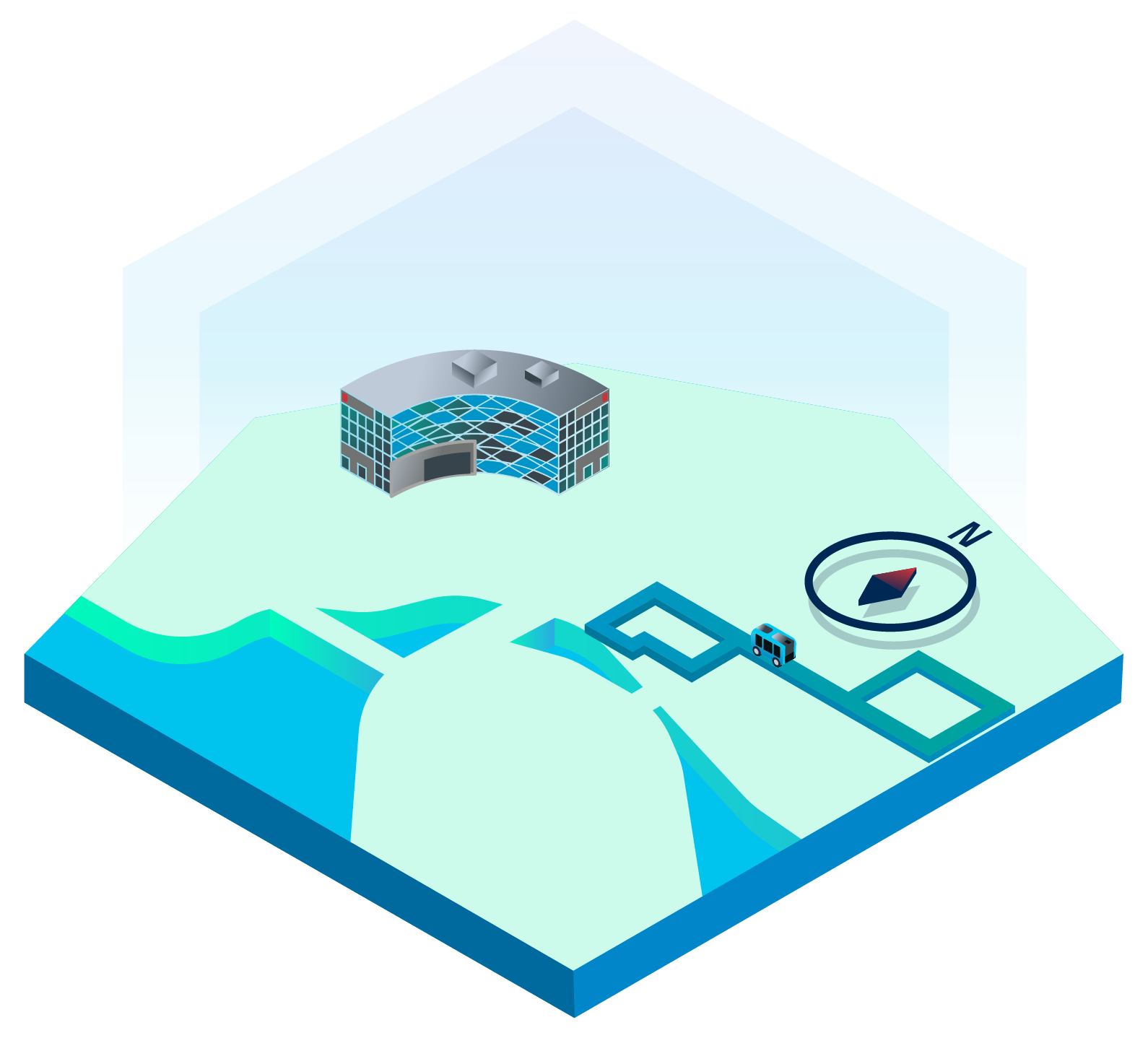
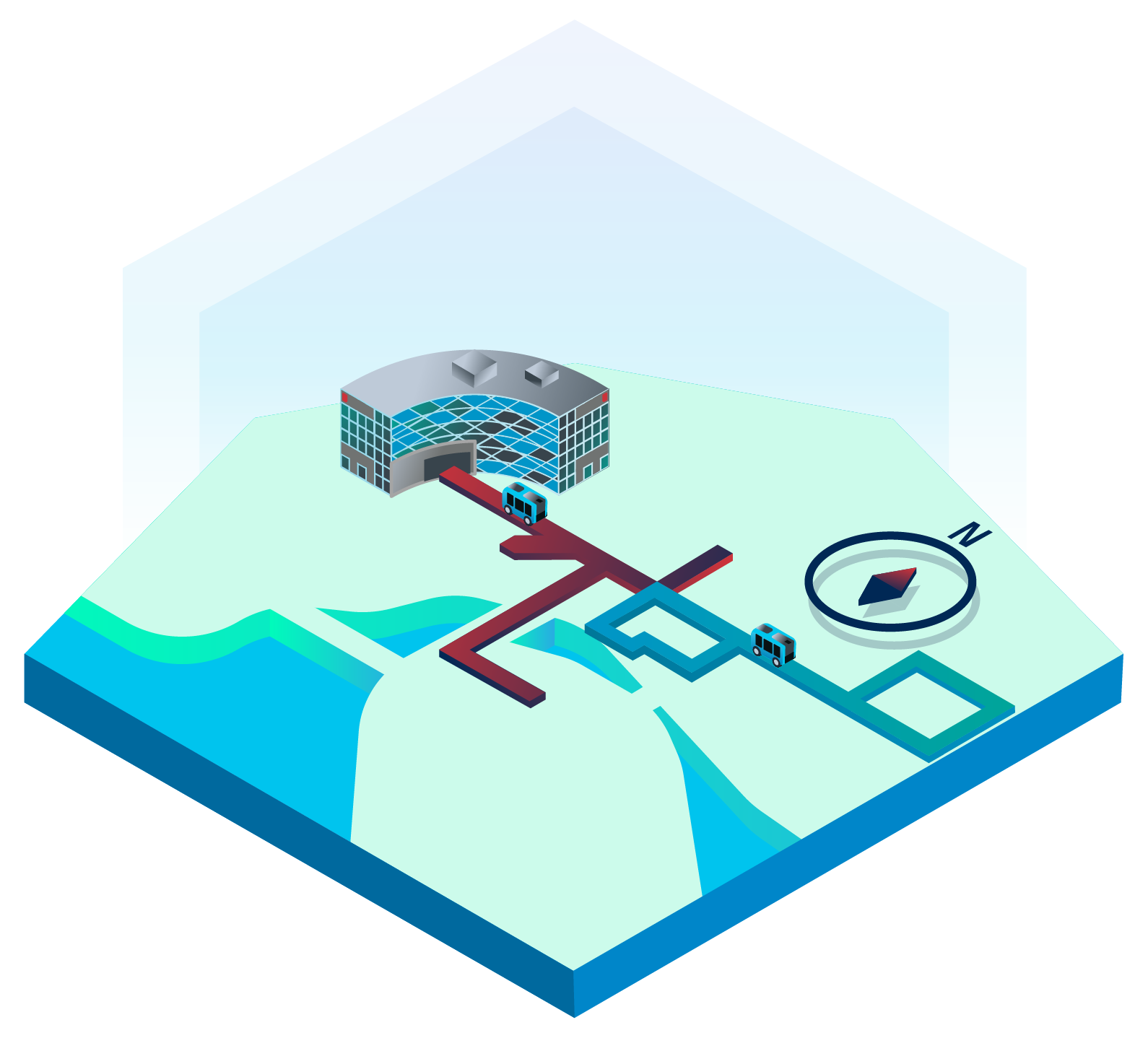
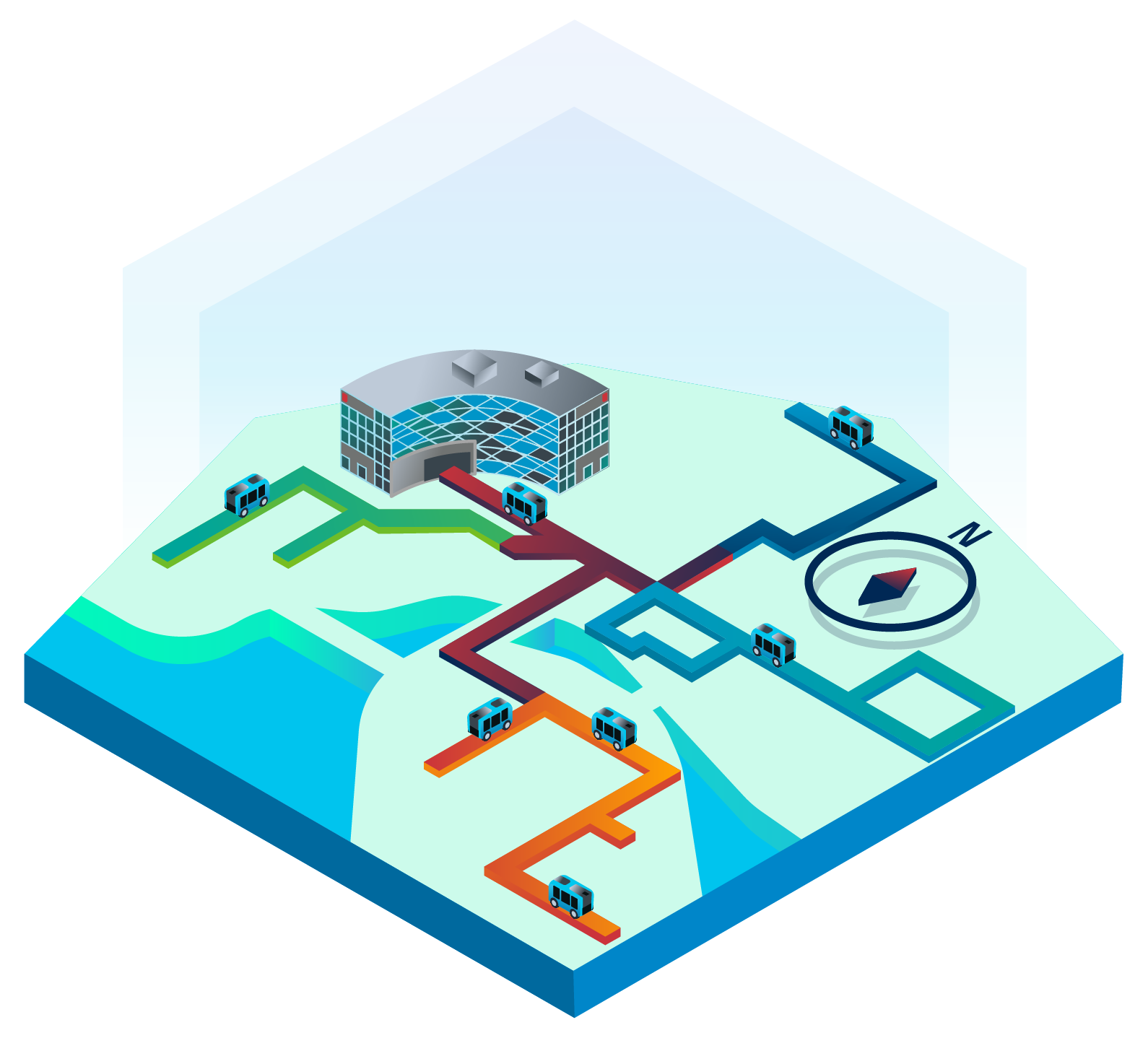
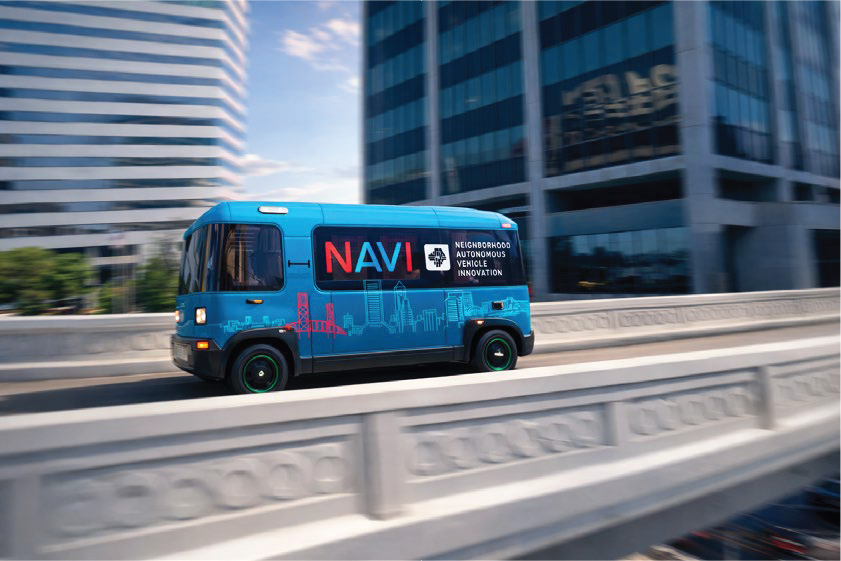
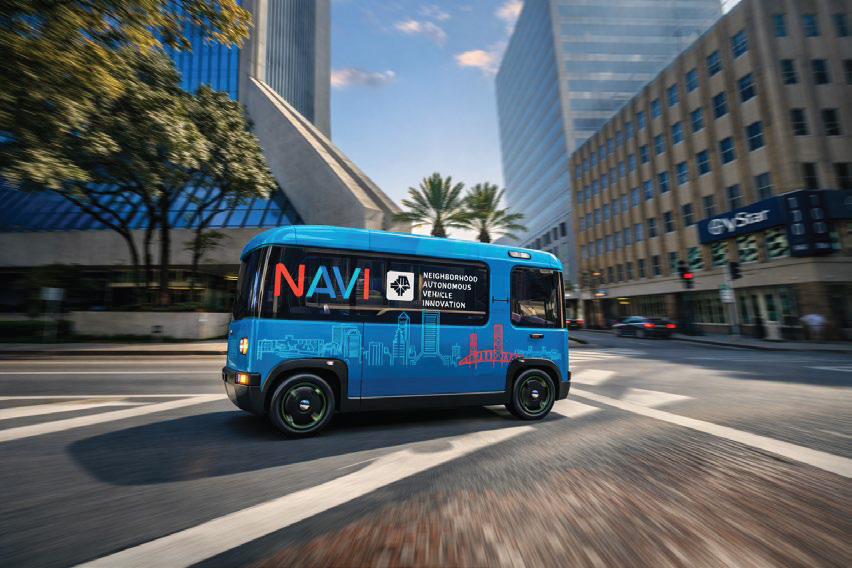
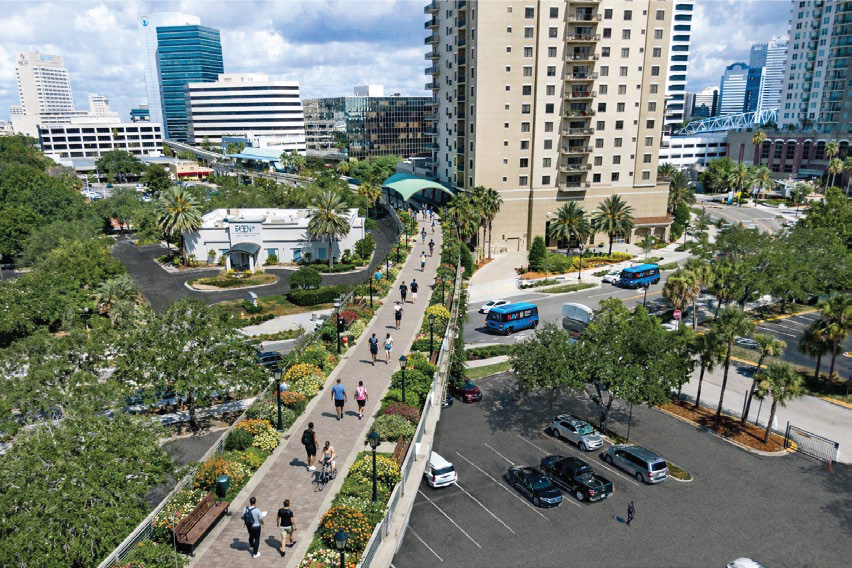
Phase I: Established The Neighborhood Autonomous Vehicle Innovation (NAVI) service, running from Central Station to the Sports and Entertainment District, including EverBank Stadium.
Jacksonville Transportation Authority Board Room
100 LaVilla Center Drive
Jacksonville Marriott Downtown Duval Ballroom
245 Water Street
Conference Center at the Main Library
303 N. Laura St. (enter on Main St.)
FSCJ Advanced Technology Center – Room T140
401 West State Street
Doubletree Jacksonville Riverfront
1201 Riverplace Boulevard
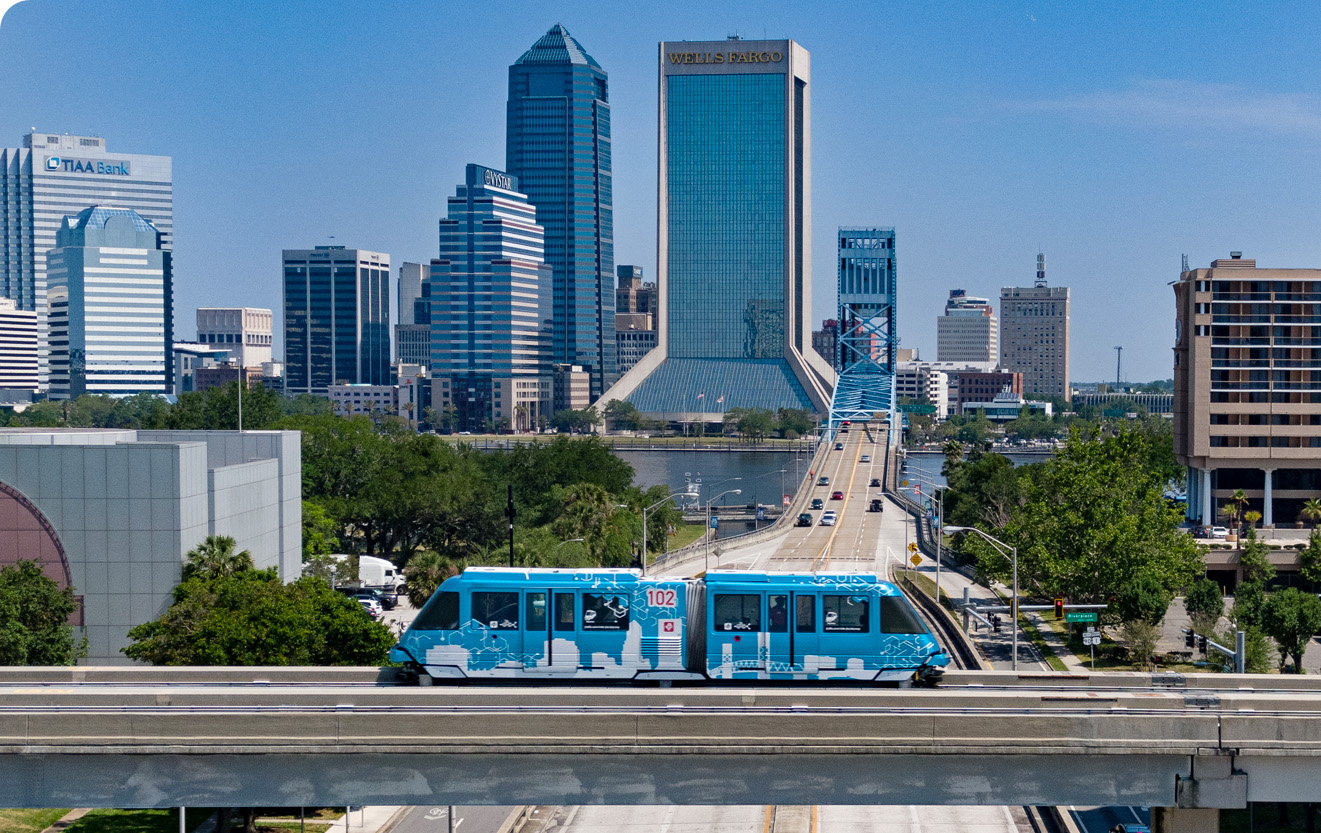
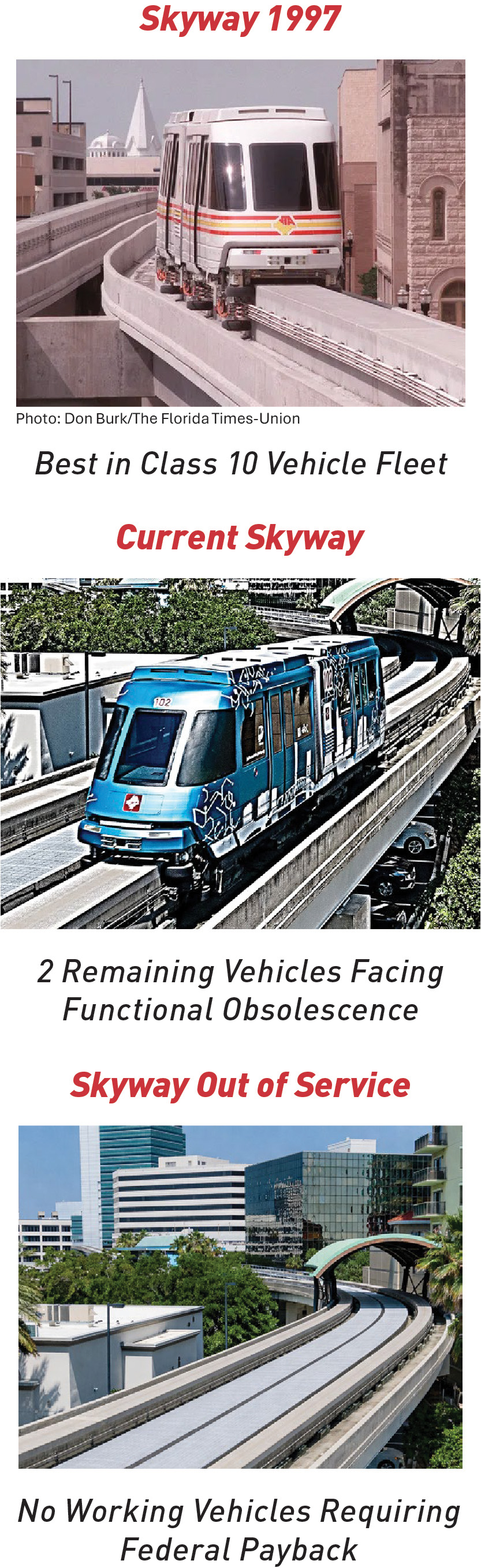
The U²C Program is the JTA’s plan to modernize the Skyway and connect the neighborhoods across Downtown and nearby neighborhoods. The program is being developed in three phases.
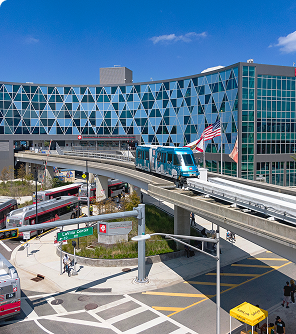
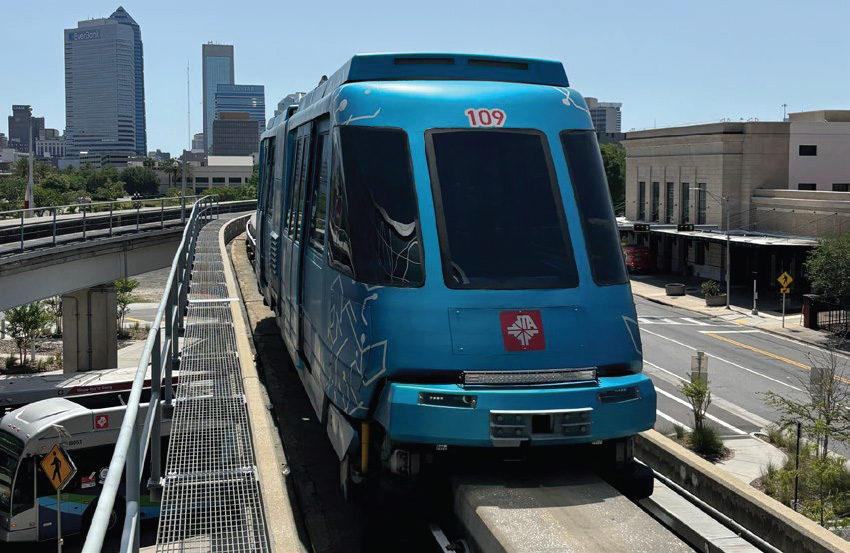
Alternative 1 keeps the Skyway system operating as it does today and finds a manufacturer to repair, rehab, and rebuild the vehicle fleet back to the original service level. The existing track would remain in use with rehabbed vehicles and a new automated train control system. Repairs would be made to the existing track to maintain the existing service.
Fewest Potential Impacts
Rehabbing Vehicles May Be Difficult
Federal Funding Requirement
Limited Connectivity
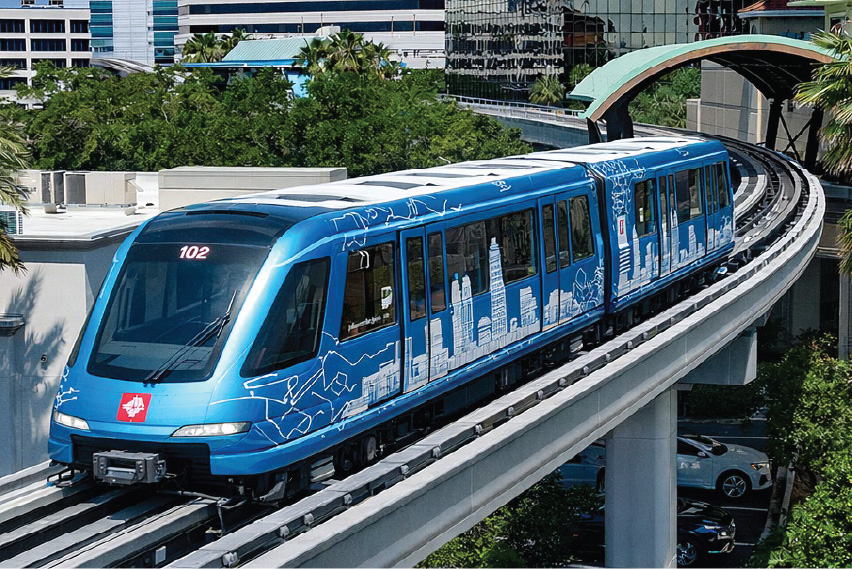
Alternative 2 would replace the current Skyway system with a new fleet of modern APM trains. This upgrade would require removing the center guide beams, retrofitting the elevated structure, and completing any additional structural updates needed to support new trains. The automated train control system would also be replaced or updated to ensure compatibility with the newer technology.
Reduces Future Obsolescence Risks
Safe, Reliable, and Modern Vehicles
More Frequent Service
Significant Infrastructure Upgrades Required
Limited Connectivity
Alternative 3 upgrades the Skyway to support both current and future autonomous vehicles (AVs). Under this option, the elevated guideway would be resurfaced and modified to function as a dedicated AV roadway, and the existing train control system would be replaced with technology embedded largely within the vehicles themselves. New ramp connections could be provided to existing streets at Rosa Parks, Leila Street, and Kings Avenue to allow AVs to travel beyond the downtown urban core and provide greater connectivity.
Reduces Future
Obsolescence Risks
Greatly Expands Connectivity
Major Structural Modifications Required
Alternative 4 removes the existing elevated Skyway and station platforms entirely. New street-level stations would be constructed, and autonomous vehicles (AVs) would operate on existing downtown streets. This option eliminates the elevated skyway and fully transitions service to the roadway network.
Reduces Future Obsolescence Risks
Flexibility for Future Growth
Improves Downtown Sightlines
Slower Travel Times and Traffic Unreliability
Federal Funding Implications
High Cost to Remove the Elevated Structure and for Dedicated Lanes
Alternative 5 repurposes the existing elevated Skyway into a multiuse trail that connects directly with the Emerald Trail network. New street-level stations would be constructed, and autonomous vehicles (AVs) would operate within dedicated lanes where feasible on existing downtown streets. This option repurpose the skyway while maintaining it as an active transportation facility.
Flexibility for Future Growth
Federal Funding Implications
Slower Travel Times
Unknown Costs to Retrofit the Elevated Structure and for Dedicated Lanes
Long-term Ownership and Maintenance
A Project Development and Environment (PD&E) Study is an environmental and engineering process that was developed by the Florida Department of Transportation (FDOT), in response to the National Environmental Policy Act (NEPA) of 1969. The PD&E study process ensures that transportation projects are developed with consideration of current engineering standards, project costs, and minimization of social and environmental impacts, while involving the public throughout the entire study process.
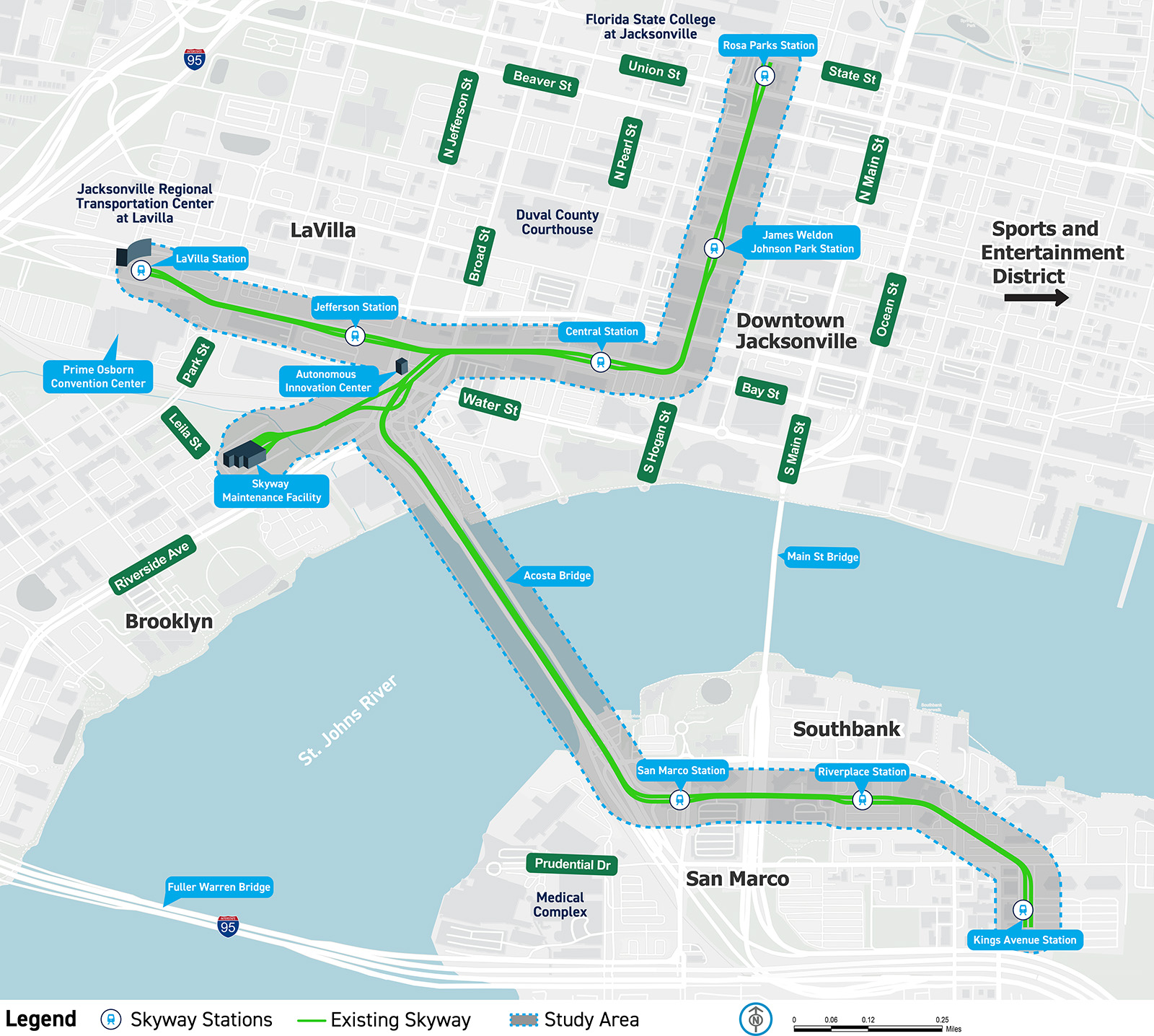
The current Skyway system is over 35 years old and requires modernization to continue serving Jacksonville. This study evaluates how to rehabilitate the existing infrastructure while expanding service to meet downtown’s growing needs. We are evaluating “Build” alternatives against a “No Build” option to find the most cost-effective and impactful solution. With your input throughout the process, we will identify a Preferred Alternative to recommend to the JTA Board.
The project spans the full 2.5-mile extent of the current Skyway. To account for environmental considerations, future expansion, and multimodal integration the study area includes a 200-foot buffer zone measured from the centerline of the existing guideway.